Mattress Education
Inside an Organic Hybrid Mattress: How Its Layers Work Together
An organic hybrid mattress combines materials with different jobs: some cushion the body, some provide resilient support, and others form the protective outer cover. Understanding how those layers work together makes it easier to compare construction details—and to tell useful information from broad marketing claims.
What makes a mattress a hybrid?
A hybrid mattress brings together two or more distinct construction approaches. Most often, the term describes a bed with a spring-based support core and one or more comfort layers made from foam, latex, fiber, or other cushioning materials. In an organic hybrid, some or all of those components may use materials grown, processed, or certified under particular environmental or textile standards.
The word “hybrid” does not, by itself, tell you exactly what is inside. One model might pair pocketed steel coils with natural latex; another may use a different spring design and several cushioning layers. The word “organic” is also not a complete materials list. It is a prompt to look closer at which components are certified, what certification applies, and whether the claim covers the entire mattress or just a specified material.
That closer look matters because the finished sleep surface is not the work of one ingredient. A mattress is a system. The cover, comfort layers, transition materials, and support core each influence how the bed feels and performs. Their thickness, density, arrangement, and attachment all help shape the experience.
The layer-by-layer view
Mattress makers may describe construction from the top down, the bottom up, or by naming each component. A useful comparison starts with the role of each layer, then asks how the complete arrangement fits your needs. The precise materials vary, but the following framework can help make unfamiliar specifications easier to read.
1. The cover: the first point of contact
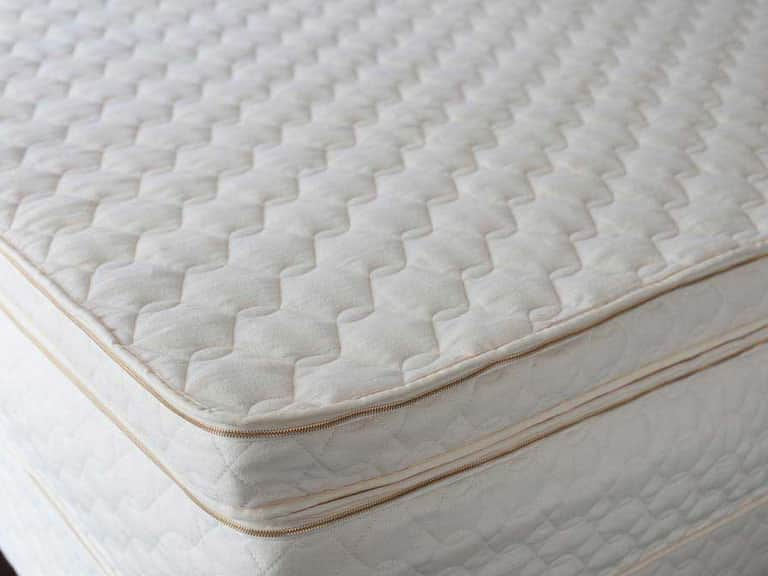
The cover encloses the mattress and is the surface closest to your sheets and body. Organic mattress covers may use cotton or another textile, sometimes with wool batting quilted into the fabric. The feel of the cover depends on its weave, thickness, quilting, and the materials beneath it.
A cover can contribute to breathability and surface texture, but it should not be treated as a substitute for the mattress’s internal construction. A soft-feeling cover cannot make a support core suitable for every sleeper, just as an organic fiber in the cover does not establish that every internal component is organic.
Check whether the cover is removable, whether it can be cleaned, and what care instructions apply. “Removable” does not necessarily mean machine washable. Some covers are designed for spot cleaning only, and washing or removing a cover contrary to the manufacturer’s instructions could affect the mattress or its warranty.
2. The comfort layer: cushioning and surface feel
The comfort layer is near the top of the mattress and contributes to the initial sensation when you lie down. In a hybrid, it may be made from latex, foam, wool, cotton, or a combination of materials. A thicker or softer comfort layer can feel more cushioning, while a firmer or thinner layer may create a more direct connection to the support system below.
Comfort is personal. People differ in preferred firmness, sleep position, body shape, and sensitivity to pressure. The same mattress may feel different to two sleepers, so a product description cannot reliably promise a universal fit. Instead, use material and construction information to narrow your choices, then consider how the maker allows you to test or adjust the mattress.
3. The transition layer: connecting comfort and support
Some designs include a transition layer between the upper cushioning and the main support core. Its purpose is to help create a gradual change in feel rather than an abrupt shift from plush surface to firm foundation. It may also affect how deeply a sleeper settles into the mattress.
Not every mattress identifies a separate transition layer, and not every design needs one. In some constructions, the comfort material itself transitions into the support system. Ask for a layer diagram or written specification if the description is unclear. The important point is not the label; it is understanding the overall stack and how its components are meant to interact.
4. The support core: the structural foundation
In many hybrids, the support core is a coil system. Coils can be arranged in different ways, including as individually wrapped units, but the word “coil” alone does not reveal the full performance story. Coil count, gauge, layout, zoning, perimeter design, and the materials above and below the springs can all matter. Ask what the construction is rather than assuming one specification tells the whole story.
Some mattresses described as organic or natural use a latex core instead of a conventional spring system. That may offer a different feel and construction profile, but it does not automatically make the mattress a hybrid. Product terminology varies, so rely on the disclosed components rather than a category name alone.
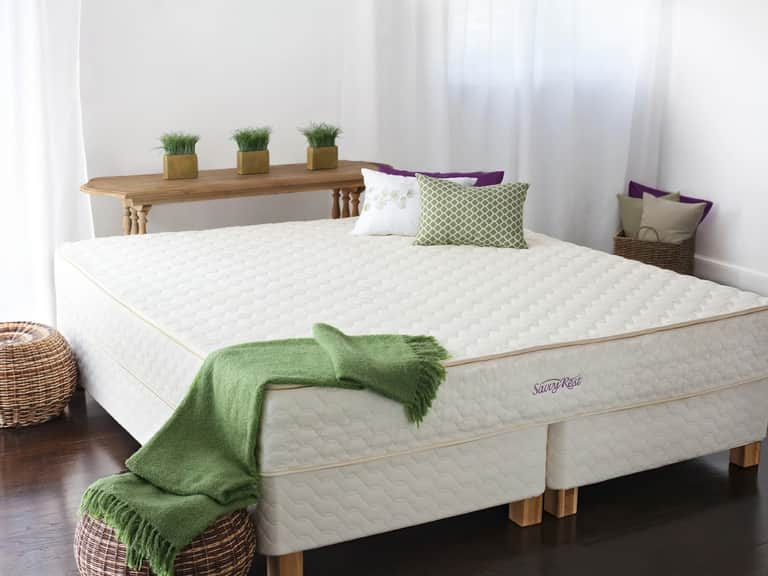
For an example of a natural latex construction, the Savvy Rest Serenity Latex Mattress is described as a customizable, three-layer latex mattress with an organic cotton casing quilted with wool. Its construction illustrates how a mattress can use layered materials without a coil core. It is a latex mattress rather than a coil-and-comfort-layer hybrid, so it is useful as a point of comparison—not as a definition of every hybrid design.
5. The base and edge: details that complete the system
Below the main support components, a mattress may include a stabilizing base layer or fabric encasement. These parts help hold the construction together and may affect how the mattress works on a foundation. At the perimeter, reinforced edges or a firm coil border can change the sensation when sitting or sleeping near the side, though edge support varies from one design to another.
Confirm what type of foundation the mattress requires. A bed may need a slatted platform, a compatible adjustable base, or another form of support. Slat spacing and the overall condition of the foundation can matter. A carefully made mattress still depends on an appropriate base to perform as intended.
How the layers work together
It is tempting to evaluate a mattress by one standout feature: a thick comfort layer, a particular fiber, or a high spring count. But individual components do not act in isolation. A soft upper layer over a responsive core can feel different from the same material over a more conforming support system. Likewise, a breathable cover cannot guarantee that every sleeper will feel cool, because room temperature, bedding, sleepwear, and personal factors also influence comfort.
Think of the layers as a sequence. The cover provides the finished surface; comfort materials cushion; transition components, when present, help bridge the feel; and the support core forms the structural base. If one part is unusually soft, thick, firm, or responsive, it may change the way the other parts are perceived.
Motion transfer and edge support are also whole-mattress questions. A mattress with an adaptable comfort layer might absorb some movement, while the support system and frame influence how motion travels. Neither a material name nor a single measurement guarantees how a couple will experience the bed. If sharing, consider testing the mattress together when possible and look for a clearly explained home trial policy.
What “organic” can—and cannot—tell you
Organic claims deserve careful reading. A mattress may contain certified organic cotton, certified organic latex, or other materials with specific certifications, while other components may be made differently. The scope of each certification matters. Look for the exact standard, the component it covers, and the documentation available from the manufacturer.
Some standards address the organic status of agricultural inputs or processing requirements; others concern textile processing or product contents. Certification names are not interchangeable, and a certification for one component does not automatically certify the whole mattress. If a seller uses a broad phrase such as “organic mattress,” ask which parts are certified and whether the product or only a material carries the claim.
Also distinguish between “natural” and “organic.” These words are often used in product descriptions, but they do not necessarily provide the same information. A natural material may be minimally processed or derived from a natural source without being certified organic. Neither term, without details, tells you every ingredient, treatment, or construction method involved.
Good consumer guidance is specific rather than absolute. Read labels, request certification details, and treat vague environmental language as a reason to ask questions—not as proof of a particular standard. If a claim is important to your decision, seek written documentation that identifies the relevant material and scope.
A practical checklist for comparing mattress layers
Before comparing prices or brand language, collect the construction facts. A simple checklist can help you compare like with like and identify what is still unknown.
- List every layer. Record the cover, comfort materials, transition components, support core, and base if specified.
- Ask for thicknesses. A materials list is more useful when the maker also explains how much of each material is used.
- Clarify the support system. Find out whether the mattress uses coils, latex, or another core, and ask how that system is constructed.
- Identify certification scope. Note the exact certification and the component it applies to; do not assume one certified ingredient covers the entire mattress.
- Understand the feel options. Ask whether firmness is fixed or customizable and whether the manufacturer explains how to choose among configurations.
- Review the cover instructions. Check whether it is removable, spot-clean only, washable, or intended to remain in place.
- Confirm foundation compatibility. Verify support requirements, including whether an adjustable base is allowed and whether slats must meet specific spacing guidelines.
- Read the trial and warranty terms. Check the exchange window, return conditions, warranty exclusions, and any requirements for proper setup.
- Look for a complete specification. If key details are missing, ask the manufacturer before treating a marketing description as a full construction disclosure.
This process does not identify a universally best mattress. It gives you a clearer basis for deciding whether a design deserves closer consideration and whether the seller has answered the questions that matter to you.
Match construction to your comfort priorities
Start with the experience you want rather than assuming that a material is automatically right for you. If you like a springier feel, ask about the support system and the amount of cushioning above it. If you prefer a closer, more cushioned surface, ask how the comfort materials are layered and whether the design allows enough support for your needs. These are starting points for comparison, not guarantees of how a mattress will feel.
Sleep position can be one consideration, but it should not become a rigid rule. Side sleepers may pay particular attention to pressure at the shoulders and hips; back and stomach sleepers may focus on whether the surface feels adequately supportive. Body weight, personal preference, mobility, and existing discomfort can change what feels comfortable. A mattress is not a medical treatment, and persistent pain or sleep problems are best discussed with a qualified health professional.
For partners, consider whether each sleeper can choose a different feel or whether the bed has a consistent surface across both sides. Some layered designs permit customization, while many hybrids have a single fixed construction. Ask how the center of the mattress is built, whether adjustments are possible after delivery, and what any exchange process involves.
Care and longevity: what to verify before buying
Mattress care depends on the design. Some mattresses are one-sided and should not be flipped; others may permit rotation or have specific care instructions. Do not assume that every mattress should be turned over. Follow the maker’s guidance for rotating, cleaning, airing, and protecting the bed.
A washable mattress pad or protector can help shield the sleep surface from spills and everyday wear, but check that its fit and fabric suit the mattress. A waterproof layer may offer protection, while a breathable pad may preserve more of the surface feel; the right choice depends on your priorities. Mattress protection is separate from the mattress’s internal material certifications, so evaluate each item on its own terms.
Warranty length is only one part of the picture. Read what the warranty covers, what it excludes, how a claim is assessed, and whether the mattress must be used on a specified foundation. A warranty is not a promise that the mattress will feel identical indefinitely, nor does it replace careful handling and appropriate support.
Common assumptions worth challenging
“More layers always mean better comfort.”
More components can provide designers with more ways to shape a mattress, but layer count is not a quality score. A simpler construction may suit one sleeper better than a more elaborate stack. Evaluate materials, proportions, support, and fit rather than counting layers.
“Organic means the whole mattress is organic.”
Not necessarily. A mattress may include one or more certified organic materials alongside components that have different standards or are not certified organic. Check precisely what the certificate covers.
“A natural material is automatically the right choice for everyone.”
Materials have different properties, but personal comfort varies. Natural or organic status does not guarantee a particular firmness, temperature experience, durability, or suitability for an individual sleeper.
“The label tells the whole story.”
Category names are useful shorthand, not complete specifications. Ask for a layer-by-layer description, care guidance, and support requirements before making a comparison.
Questions to ask a mattress maker
A short conversation with a manufacturer or retailer can reveal whether a product description is genuinely informative. Consider asking:
- What are the materials in each layer, from the cover to the support base?
- What are the thicknesses of the comfort and support components?
- Which materials are certified, and what does each certification cover?
- Is the mattress one-sided, and should it be rotated or otherwise maintained?
- What foundation is required, and is the mattress compatible with an adjustable base?
- How can I evaluate the firmness or feel before buying, and what are the trial or exchange terms?
- What cleaning methods are permitted, and how might improper care affect the warranty?
Clear answers help you compare construction rather than relying on adjectives such as “luxurious,” “supportive,” or “eco-friendly.” Those words may describe the intended character of a product, but practical details are what allow you to judge whether it aligns with your preferences.
The takeaway: compare the system, not a single ingredient
An organic hybrid mattress is best understood as a coordinated set of layers. The cover shapes the immediate surface; comfort materials cushion; transition components can create a gradual change in feel; and the support core provides the underlying structure. The materials and arrangement differ from one design to another, so two mattresses carrying similar labels may offer very different constructions.
For a more confident comparison, ask what is inside, how thick each layer is, which claims are independently certified, and what care and foundation requirements apply. Then weigh those facts against your preferred feel, sleep habits, and practical needs. A thoughtful buyer does not need to decode every technical term at once. Start with the layers, verify the claims, and make the decision on the complete mattress rather than on a single appealing word.